20
EACs are official documents that provide proof of the environmental attributes associated with the
production of renewable energy. They were established with the purpose of monitoring the flow of
electricity from its source to the end user. Electricity is an intangible entity that requires continuous
maintenance on a grid. When electricity is purchased, the buyer is acquiring the entitlement to extract
a specific quantity from the power grid. A tracking system is the sole means of linking the production
and use of a particular MWh of electricity. The system records the EACs when electricity is added to
the power grid [16].
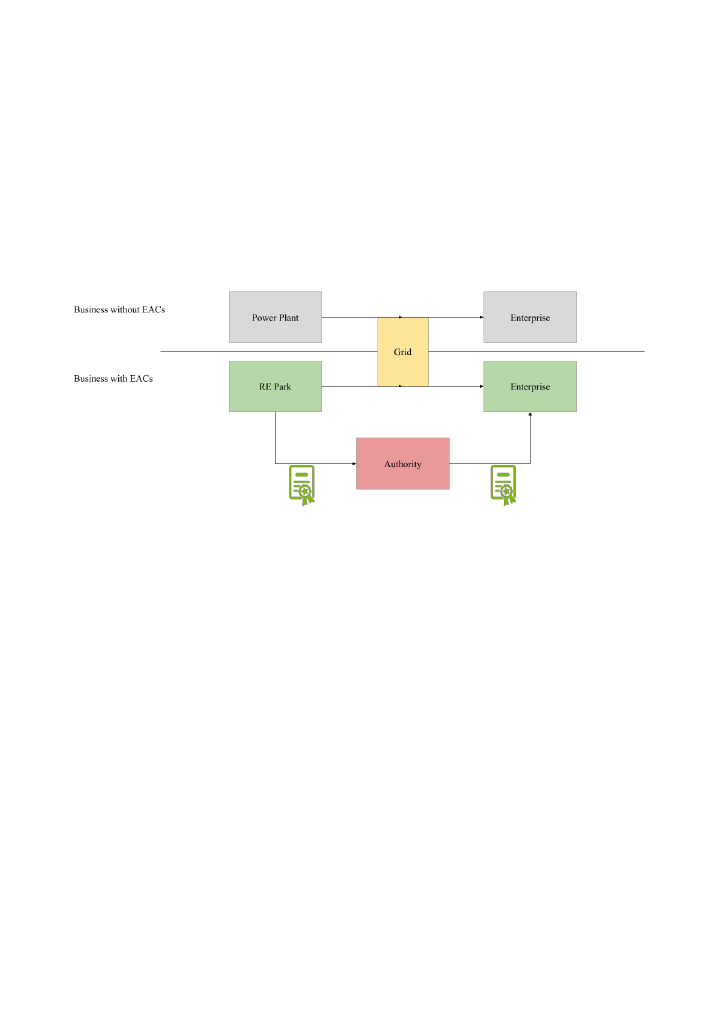
Figure 2: This diagram shows the transition of a business from non-renewable to renewable energy sources through EACs.
These unique characteristics can then be transferred to the consumer, who can make a reliable and
verifiable statement that a specific sort of electricity has been consumed. All EAC monitoring systems
share a common purpose: to monitor the characteristics of a particular MWh of energy as it moves
from a producer to a consumer.
Globally, multiple EAC systems are in place to monitor the generation and consumption of renewable
energy. The map provided displays the countries that are involved in the most prevalent schemes, as
well as the boundaries of their respective markets. Every system functions according to its own set of
regulations and has a specialised register system [15], [16]. The four primary geographical markets
are:
GOs are predominantly utilised in Europe. Every European country that is a member of the
Association of Issuing Bodies (AIB) actively takes part in the European Energy Certificate
System (EECS).
Renewable Energy Certificates (RECs) are the prevailing system utilised in the majority of
provinces in Canada and states in the United States.
International Renewable Energy Certificates (iRECs) are used by many governments
throughout the world to monitor and trace the use of renewable energy.